
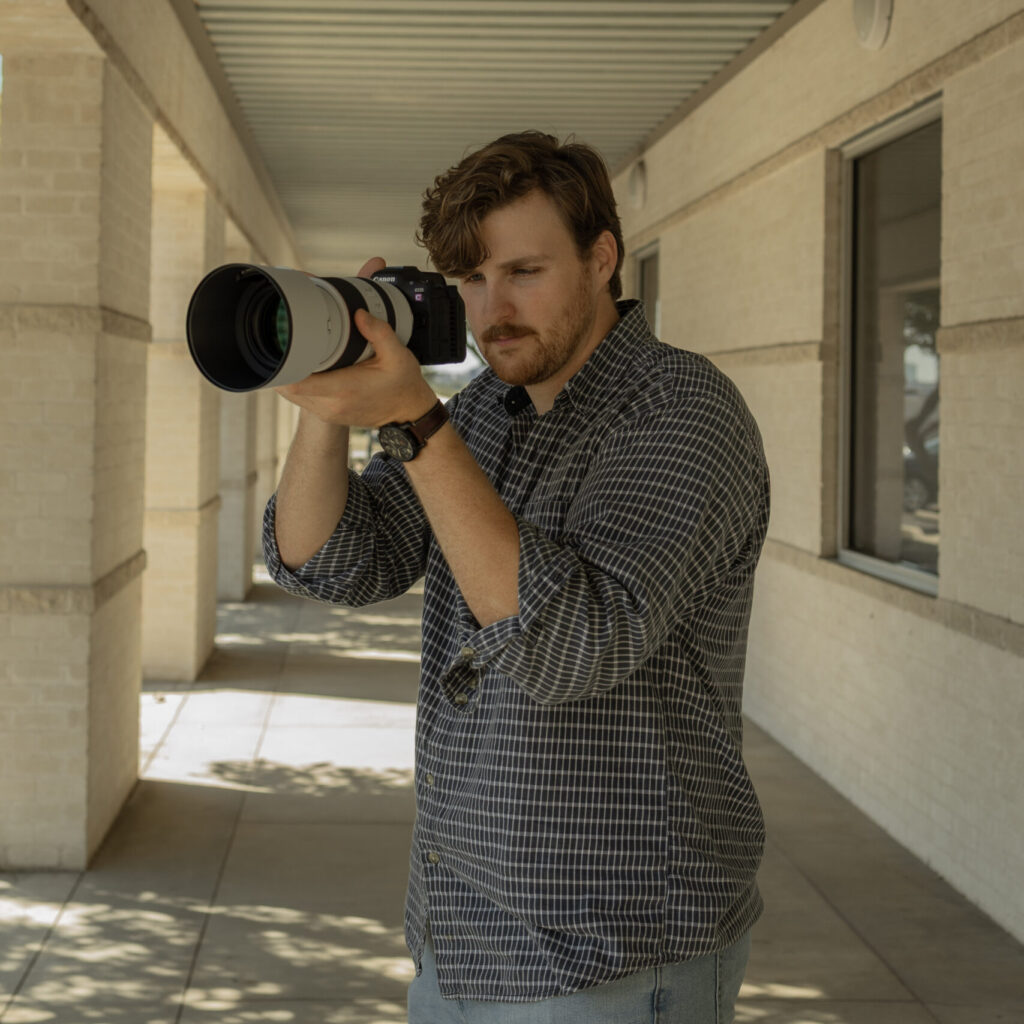
Every shoot is different, but the goal is always the same: capture high quality photos and video that tell the client’s story in a way that actually wins them work.
Most contractors finish a project, shake hands, and move on. No documentation. No photos worth using. No proof.
That’s the gap we fill. And we do it the same way every time.
Here’s the process behind every BILT Marketing construction jobsite photography shoot.
Pre-Production
Before we ever show up on site, we gather the details. What kind of project is it? What stage is it in? What’s the story worth telling?
We talk to the PM or project lead, learn the scope, and build a shot list. If there are constraints like an occupied building, active jobsite, or tight timeline, we plan around them.
This is where most people skip a step. They show up with a camera and hope for the best. We show up with a plan.
Equipment
We pack what the job requires the night before and double check it. Every project is different. A high-ceiling commercial repaint needs different gear than a tight millwork install.
If a project calls for something we don’t own, we rent it. No excuses, no cutting corners. The gear matches the job.
On the Job
We follow the shot list, but we stay flexible.
Jobsites are unpredictable. Weather changes. Crews shift. Something finishes early or runs behind. There are always surprises, good and bad.
The good ones become the best shots. A crew member doing something worth capturing. Light hitting a finished surface at the right angle. A detail that tells a bigger story.
The bad ones test your ability to adapt. A section isn’t ready. Access is blocked. The schedule changed and nobody told you.
Either way, the job gets done. That’s what separating a construction photographer from a regular photographer comes down to. Understanding the environment and working within it, not around it.
Post-Production
We back everything up immediately. No exceptions.
Then we work through the editing process, selecting the strongest images, color correcting, and building out the final set. We keep the client in the loop as we go so there are no surprises when the work lands.
If there’s written content to go with it, like a grid post or case study, this is where the copy gets drafted and tied to the visuals.
Delivery
We hand off the final assets and make sure the client knows how to actually use them.
That sounds obvious, but it matters. A folder of beautiful photos sitting on a hard drive doesn’t help anyone. We walk through where each asset fits: website, social media, proposals, recruiting materials, whatever the plan calls for.
The goal isn’t just to deliver files. It’s to deliver something the client can put to work immediately.
Why This Process Matters
Construction jobsite photography isn’t a commodity. It’s not about showing up with a nice camera and taking pictures of a finished wall.
It’s about understanding the project, the people, and the context. It’s about knowing how to work on an active jobsite without slowing anyone down. And it’s about turning all of that into content that actually helps a contractor win better work.
That’s the system. It’s not complicated. But it works.
If you’re a contractor in San Antonio and you’ve been thinking about documenting your work, steal this outline and try it yourself. Or reach out and let us handle it.